Thursday, November 1, 2012

Chez Martine (learning about donkeys)


Chez Martine
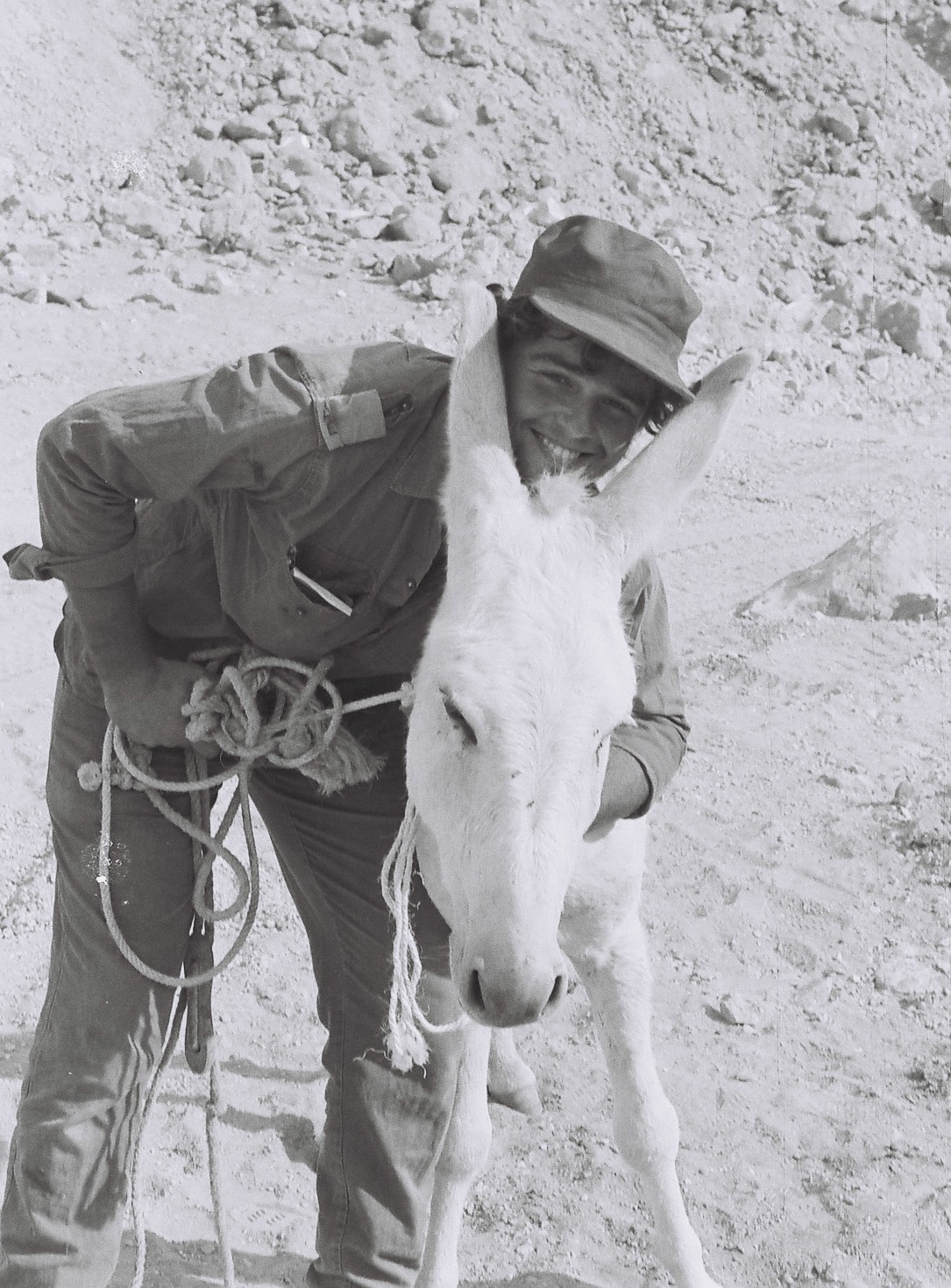
Pascal, Martine & Cathy

Martine is one of the first to believe that Donkeys were on the “come back” after so many years of neglect of this essential animal prior to the automobile. Choosing to live on the family's gentleman farmer's estate over 40 years ago, she has been a founder or co-founder of each of the main organizations in France that address the breeding, training, and re-adaptation of the donkey in our modern world either as an ecological farm work animal (mostly for vegetables and specialty types of gardening including work in hot houses) or as a leisure animal for the family.

I'll spare you the politics, only to tell you that like in all associations, professional organizations etc . It is difficult in our present world to grow a project with a common goal that does not include a power struggle or a financial gain. Despite efforts to focus on ideals, such as the well being of the animals and their status, there are always people who see associative organizations as a vehicule for their own self esteem, financial gain and or power play.
The donkey is not like a horse. It does not respond to power games, authority without reason, or simply brute force. By nature donkeys are sedentary animals that establish a territory, defend it if needed, organize their lives as a heard where each individual takes care of the others while living quite an independent life. A smart animal donkeys can be “educated” to do many things, but only because you have convinced him that doing it was a “good thing”. Those that want to dominate, force the animal to do things that are not in his opinion safe or sensible … will find the donkey to be stubborn and this to the point of exasperation. But if you listen, observe and take the time to dialogue with the animal, provided he has not been traumatized in a previous life, he will respond and do incredible things to help you in whatever endeavor you have.
Ajouter une légende

Here I want to say that people who have donkeys as decorations in their yards, as a toy for their kids, and who generally treat the donkey as a pet are in fact creating terrible conditions of life for their animal. Bad treatment of this type is common and over feeding, bad mannerisms and negligence should be identified and dealt with to protect these good spirited and generous animals.

As a sedentary animal the donkey needs his own space where he is “free” to do as he likes. Then when you want to teach him, work him, use him for a task, he needs to be taken out of his SPACE and taught that when this occurs he is “working” thus not free to do as he likes. Just like children in school, they love to learn but need a framework of conditions to focus on the task at hand. Also in the same sense, you need to respect the donkey's perceptions of personal space. If you approach from the front and extend your arm to him, for him this is an aggression, thus he is likely to turn away or react negatively since you enter his buble of comfort. Just like you when you meet someone, if you are too close or that you allow yourself to touch them, most likely you will offend the person. However if you enter like would another donkey on the side, scratch them (not a pat which is an agression) and most importantly talk to them, then they will not object to your presence and eventually allow you to start work.

Donkeys consider you to be “part of the heard” … once you have established contact. As such you need to learn Donkey language and behaviour, most of it body language and speech to let them know when you approve, disaprove of something or a behaviour. A set of simple commands, creating a “reward” that is a caress, an immediate (less than 3seconds) reaction to a “bad move” etc … and NO “goodies” such as carots or apples which in their metabolism works as if you gave your kid a “candy bar”. You can give them something like that but not on a regular basis and only occasionally.

So I have spent a couple of weeks almost with these 7 donkeys at Martine's house and was able beyond the excellent theory courses by Martine and her collegues each specializing in “feet care”, equipment, and various activities with donkeys (hiking, riding, pulling a cart or working the land), to establish a functional relationship with each animal. Of course I know I know “nothing” since each relationship is a special investment with the need to “recognize” the spirit and will of each other. But we did an interesting exercise which was to go to a fair where they sell donkeys and horses and I learned how to recognize a potential candidate for my journey. The feet need to be well aligned, vertically when viewed from all directions, the hoof not deformed which means manicured or used naturally correctly so that the animal has not developped structural issues. The back on young ones are not yet level, when you work an animal you want his whole body to be sufficiently mature. I'll be looking for animals at least 5 years old and not over 10 (maximum 15) years old. The teeth slant is more pronounced on older animals and of course it is essential to inspect the whole mouth as poor dental structure or over use indicates futur problems. You need to choose a rather underfed rather than a fat animal. Many more health issues with fat animals both structurally as well as internally. Beware the “gloss” of the coat is important to avoid animals with imballanced or parasited digestive systems. Walking the animal, paying attention to his behaviour … are all important preliminary steps to finding a work companion. Then comes the critical issue, is there a personal contact with the animal? Does he pay attention to you as soon as you meet? Do you “feel” him and does he tolerate your presence? Without letting the emotional enthousiasm overcome your analytical approach, only animals that you determine you have a feeling for are worth considering. Whenever possible, just like when you hire a person for work, you should find a way to establish a trial period where you can handle, work and become familiar with the animal. After all, you are not buying a car, but a living creature that will interact with you and make your life either miserable or full of joys. I feel ready to try.

The week's program was conducted by several experts, sometimes in team to allow more individual tutoring. The experts knew their stuff, their years of practice allowed us to ask a wide range of questions and each participant to focus on his individual project:
  • One day of overall knowledge about the animal, his history, his living habits, including anatomical and physiological knowledge.
  • One day of work on the feet with cleaning, trimming, shoeing and other treatments including diagnostic of health issues and ways to treat them. Hands-on practice was quite interesting and every day we handled the feet prior to any work with the animals.
  • One day on the material, the various contexts in which you can work the animals (farm work, pleasure rides and pack-saddle operations, the raising of donkeys to create mules …). Each halter type, saddle type, and equipment to pull was installed several times on the animals and examples of variants per culture or region of the world was discussed. The types of materials used, the ergonomy of the material to make it comfortable for the animals, the options and common errors were also covered.
  • One day at the fair to practice identification of issues with animals, discuss with sellers and observe process followed by a few hours on the legal, administrative, and business considerations for those wishing to establish an activity with donkeys.
  • The last day was devoted to the carriages and other work with donkeys. We were able to practice getting the animals ready, go through the process of getting animals used to a cart or other devices, handling the animals using voice and reigns, and of course took a ride.
During the courses, anecdotes, examples and many stories were told to illustrate the dos and dont's of the best practices. We visited several sites where people had developped various activities. Tidbits such as learning why you mount a horse from the left were shared (this was so that the saber would not impeed climbing on the saddle.

Fortunately I was able to spend a little time with Martine on site and thus was able to complete the formal course work with extensive discussions on the specifics of my proposed venture. Mostly this conforted me in my expectations that if I have much to learn, none of it is out of my reach nor more difficult than simply taking the time to adapt and develop good practices.
Possibly, one change is that I might after the first 6 months (basically the PCT) acquire a big donkey, a mule or possibly even a mustang to ride as well as walk … we'll see.
Did I mention the good food, the wines, the “home life” feeling that enabled the 10 students to feel comfortable, participate in daily life activities and learn from each other. An important part of the training allowed students to be focussed on learning while sharing life experiences.

Coordinates:
Martine Jouclas
 L'Ânerie. 06 87 47 68 84
Centre ânier de formation

Photos by Isabelle & Cathy (via PER)

Isabelle David
La ferme Bio de Vignaut
Produits bios de saison
Camping à la ferme
Visite 
Table d'hote /Repas collectif
 www.lafermedevignaut.e-monsite.com

Thursday, August 23, 2012

I have been contacting associations and working on the route. As I tell my friends about this journey, they come up with stories, share their concerns and even send me pictures.
As part of the preparation, we had a family diner with my daughter Agate, son Adrien and Veronique my wife where I explained to all the planned route for the journey and most important that I was not leaving them without resources and would remain available in case of emergencies. I am planning to be regularly several months a year in France and share the family life I have helped to create. I also explained that I had committed to creating a home environment to raise the kids and that now that they are adults, each one needed to take his path in life. Agate cried and said I was abandoning them. These are times where each one needs to grow and assume his own life's course. It is part of my way of relating to others, put them in situations where they cannot just depend on me while knowing that I'm present and will always be there for them. I'm willing to help, be there when needed, but not serve as a crutch for the handicap of looking at your own life straight in the face. We are both ALL TOGETHER and TOTALLY alone in life.
Another fear was that I would leave Veronique without resources so I explained to them that Veronique  was provided for and had her own resources to lead her life, another life than mine. It is difficult to explain that the family unit is not threatened while the life of each individual is taking different paths. Then came statements like "you might never come back" or " I don't see you coming back" ... to which I can only say that if it is possible, I'm not planning to die soon and that what I'm doing, if it seems 'adventurous', certainly is not more dangerous than crossing the street, it just is not a usual way of life within the social morays.
It is part of preparing such a journey to give time to those who are close to you to get used to the idea and progressively allow them to let go of their own fears. Individuals need different time frames to adjust to emotional, conceptual and physical changes in their environment. I'm sure that by the time I leave there will be several passages where emotions and fears will emerge and need soothing.

As for friends, I tell them to come and join me while on their vacations. It is a way to say that I am not leaving them, only living my life and inviting them to join this part of my life to pursue our friendship. They have to understand that friendship is also sharing experiences together.

When will you start thinking about joining the journey ???


Friday, August 10, 2012

The journey


Long Ears 2 Chile

The world is full of natural wonders that we talk about and dream to see. There is a time in life when you have to decide wether to keep these as dreams or actually LIVE the singular experience that the Oceans, Mountains, and Nature in general has to offer. The paths to awareness are many, this happens to be my path … that I'd like to share with you.

Language source is English, but you can read in any language using at the bottom of the page the translator from GOOGLE. Not as good as the original, it allows you to follow ... 

The west coast of the Americas is a land of dreams. Pionneer Europeans, natives or even migrants of all times have recounted the tales of this land as a human experience that are now in our common culture. It's history since the conquistadors, the gold 49ers, the Mexican, latin american and central american revolutions has largely focussed on the conquering mentality of our western culture. It has often overlooked the incredible beauty, natural wonders and inherent treasures of the land where first nation cultures used to live in a balanced non destructive harmony.

April 2013 two donkeys and I will begin on the Pacific Crest Trail on a 2 year 9000+ miles journey to reach Puerto Montt, the shipbuilder's paradise, starting point of another trip by boat.
Our journey will begin on the Pacific Crest Trail, this is a well documented 5 months long trail practicable for horses throughout the states of Washington, Oregon and California. It meanders throughout the remaining wilderness of the west coast while retracing the historical steps of such legends as John Muir. At the Mexican border one needs to reach Mexicali to cross over and then dive east into the rocky mountains extension into Mexico who's eastern slopes allow you to reach Mexico City and further on to Guatemala, El Salvator, Nicaragua and Costa Rica.”' Meandering through mountain passes and low lands towards the Panama Canal we will have to go over uncharted terrain to find the right route to reach the Columbia foothills and climb progressively the Andes, crossing over to it's eastern side and it's villages in the upper Amazone. Then the route is due south cutting through Equator and Peru to once again rise over the mountains to stay on the western side of the Andes throughout Chile.

This is NOT an expedition, not an adventure (in the sense of those events organized on TV), not a challenge or an attempt to prove anything … as if life was made to struggle against something. NO, this is a means to experience a way of life, a means of living in harmony with the land, meet it's people, and all living creatures while personnally continuing to grow. This journey will be documented in films and a “blog” (log book with pictures) that will attempt to capture: the experience, the encounters, the present state of the environment. Last year I did this during a 4500 Km trip by canoe across Canada, see www.mountains2montreal.ca.

Planned initially as a journey for a couple as I have learned the importance of sharing daily human experience when I spent 4 months alone in the Tahitian Islands in 2010; I will be starting off alone as my wife begins another life. People will be invited to join on long or short periods based on their ability to respond to the spirit of the journey. Walking an average of 20km per day, there will be time to stop and stay with people or in wilderness areas that compel one to spend a little time to appreciate the environment. At times night walks, long days in the deserts, and obligatory crossings of car designed environments will require endurance and determination.

At 62 with extensive experience both in the wilderness and achieving objectives, after a carreer as an IT Director in major international firms, I both know that I know nothing of what awaits me yet feel confident and secure that I'll be in Puerto Montt in 2015. As my father would have said “beware of what you want, you might get it”, and though we never know what tomorrow has in store for you, I really want to do this trip and will deal with health and local issues as I meet them. I know that YOU, reading this, and all those I will meet on the way, will join me in spirit, in person and/or help me because sharing our humanity is a means of feeling good about ourselves.

I have always been a wanderer. As my mother in law says “ Pascal would talk to a sitting dog”, meaning I like to meet people, find that in the world there is a community of people who think, feel, experience life as I do and like to share essential parts of themselves with me even if tomorrow or in a few days I move on … to another meeting. I like to teach skills I have, make music, work on a garden or a building project … and most of all share daily life with love.

I tend to take time to prepare a journey acknowledging that age and limited ressources require that you pay attention to details. I'm leaving with 2 donkeys who will carry light loads. This will allow me to walk at a good pace and yet have about one month of food autonomy. Water will be extra weight in regions where it is scarce and needs to be rationned. Donkeys like having company and having 2 will allow for more autonomy and security in case someone twists an anckle, in case one Donkey has a foot problem, etc … Donkeys are sturdy, sure footed and able to live on the land in most environments which is not true of Mules or Horses. Smaller animals, they tend to be easier to care for and are remarkably intelligent contrary to traditional lore.

Expectations:
The journey will be a shared experience. Shared with participants, shared by encounters, shared through blog postings and film making, shared by those who will want to participate in creative manners before, during and after the journey.

Even before starting, just as for all my journeys, I already know that this journey would not be possible without the help of many at all phases of the journey. Hopefully like for my previous journeys where I taught people how to make bread, pizzas, chicken coops, gardens, … this journey will also be a means of bringing to others, in a non commercial/financial relationship, life skills, awareness and important moments in their lives. An example is the collection of berries, plants, etc and offering them in villages against whatever another person wishes to give me (even nothing is ok). This is the only way for me to consider life worthwhile.

The journey will find it's own shape over the 2 to 3 years time frame with regular returns to see family and friends and manage to be present for all as well as deal with administrative stuff. Although basically I expect to reach Puerto Montt in Chili, weather, encounters, health, and many other factors will undoubtedly change my vision, shape the route and give life to a particular trip that will BE LongEars2Chile and not what I can imagine today. Life has always been for me the meeting place between my desires, my ability to make things happen as I would like them to happen and the opportunities, realities and encounters I have made along the route. Who could have predicted meeting the mother of my children at 38, a successful international career, crossing Canada in a canoe … etc and now, much like Martin Luther King, I say “I have a dream” … and let life find it's way to making my vision exist.